
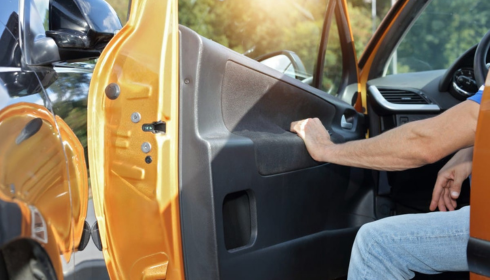


Dooring accidents are among the most sudden and dangerous bicycle crashes in Indianapolis. They happen when a parked driver opens a vehicle door directly into a cyclist’s path, leaving no time to react. Unlike other bicycle collisions, which may involve braking or swerving, dooring accidents often result in a direct impact followed by a secondary crash into traffic or pavement. The consequences can be life-altering, even at low speeds.
Cyclists riding lawfully in bike lanes or along the right side of the roadway are particularly vulnerable. A moment of inattention from a parked driver can send a cyclist flying over the handlebars or into moving traffic. Many injured riders only begin to understand the seriousness of these crashes after speaking with a bike accident lawyer in Indianapolis who recognizes how deceptively severe dooring injuries can be.
Vaughn A. Wamsley has worked with Indianapolis cyclists whose lives changed instantly because a driver failed to check before opening a door. Understanding how dooring accidents happen and why they often cause permanent damage is critical for protecting long-term health and financial stability.
Why dooring accidents happen so frequently
Dooring accidents are not rare, especially in urban environments where curbside parking is common. They occur because drivers exiting parked vehicles often focus on traffic behind them rather than on cyclists approaching from the same direction.
• Many drivers are conditioned to look only for cars when opening a door. This habit causes cyclists to be overlooked, even when bike lanes are clearly marked alongside parked vehicles.
• Passengers exiting rideshare or personal vehicles may be distracted, unfamiliar with traffic patterns, or focused on unloading items rather than checking mirrors.
• Poor lighting conditions during early morning or evening hours make cyclists harder to see, increasing the risk of sudden door openings.
High-risk areas for dooring accidents in Indianapolis
Specific neighborhoods and roadways in Indianapolis see a higher frequency of dooring incidents due to street design and parking density.
• Downtown Indianapolis features narrow streets with curbside parking directly adjacent to bike lanes, leaving minimal buffer space for cyclists.
• Areas like Fountain Square and Broad Ripple combine heavy foot traffic, parked vehicles, and active nightlife, increasing the likelihood of inattentive door openings.
• Streets without dedicated bike lanes force cyclists to ride closer to parked vehicles, placing them directly in the door zone.
How quickly a dooring crash unfolds
Dooring accidents happen almost instantaneously. A cyclist traveling at even a moderate speed has no opportunity to stop or change direction once a door opens.
• Direct impact with the door often throws the cyclist forward or sideways, causing immediate loss of control.
• Secondary impacts occur when cyclists are pushed into moving traffic or land forcefully on the pavement.
• The abrupt nature of these crashes frequently leads to head, spinal, and upper body injuries.
Common injuries caused by dooring accidents
Dooring crashes tend to produce severe injuries because of the sudden stop and awkward body positioning involved.
• Head injuries are common when cyclists are thrown over the handlebars or strike the ground, even when helmets are worn.
• Spinal injuries occur as the body twists or compresses during impact, potentially causing disc damage or nerve involvement.
• Shoulder, wrist, and collarbone fractures often result from instinctive attempts to brace during the fall.
• Soft tissue injuries, including deep bruising and muscle tears, may worsen over time and limit mobility.
Why dooring injuries often lead to permanent damage
Unlike some bicycle crashes where impact forces are distributed, dooring accidents concentrate force abruptly on specific body parts. This increases the risk of lasting harm.
• Spinal injuries may lead to chronic pain, reduced range of motion, or nerve damage that affects daily activities.
• Head trauma can cause lingering cognitive issues, headaches, or balance problems that interfere with work and independence.
• Shoulder and wrist injuries may require surgery and can permanently limit strength or mobility.
Delayed symptoms after a dooring accident
Many cyclists initially underestimate the severity of dooring injuries because adrenaline masks pain. Symptoms often develop hours or days later.
• Neck and back stiffness may intensify as inflammation increases, revealing deeper injuries.
• Numbness or tingling in the arms or legs can signal nerve involvement that was not immediately apparent.
• Persistent headaches or dizziness may indicate brain trauma that requires further evaluation.
Emergency departments in Marion County frequently document delayed-onset symptoms in dooring cases, which later become critical when insurers attempt to minimize injury severity.
Medical treatment timelines for dooring injuries
Treatment following a dooring accident often extends well beyond initial emergency care.
• Early evaluation focuses on identifying fractures, head injuries, and spinal trauma. Imaging is often necessary due to the crash mechanics.
• Follow-up appointments frequently uncover additional injuries once swelling subsides, and pain patterns become clearer.
• Physical therapy is commonly prescribed to restore mobility and manage chronic pain, sometimes lasting months or longer.
Insurance challenges are unique to dooring cases.
Insurance companies often attempt to downplay dooring accidents by framing them as minor incidents involving parked vehicles.
• Adjusters may argue that the cyclist should have avoided the door, ignoring the lack of reaction time.
• Claims of shared fault are common, particularly when bike lanes run alongside parked cars.
• Insurers may question injury severity due to low vehicle speeds, despite the high impact forces involved.
Indiana fault rules and dooring accidents
Indiana’s fault-based insurance system requires injured cyclists to prove negligence. In dooring cases, fault often hinges on the driver’s responsibility.
• Drivers have a duty to ensure it is safe before opening a vehicle door into traffic.
• Cyclists riding lawfully in bike lanes or along the roadway are not required to anticipate sudden door openings.
• Attempts to assign fault to cyclists are common but frequently unsupported by traffic laws.
The role of evidence in dooring claims
Because dooring accidents happen so quickly, evidence becomes essential in establishing what occurred.
• Photographs of the scene, door position, and bike lane markings help clarify fault.
• Witness statements can confirm the sudden nature of the door opening.
• Damage to the bicycle and vehicle door often demonstrates impact force and direction.
Long-term impacts on cyclists
Dooring injuries often affect more than physical health. Many cyclists face long-term challenges.
• Extended time away from work due to pain or limited mobility.
• Ongoing medical expenses for therapy, imaging, or surgery.
• Anxiety or fear when riding near parked vehicles.
• Permanent lifestyle changes due to reduced physical capacity.
How Marion County courts evaluate dooring cases
Marion County courts regularly handle dooring accident claims, particularly as cycling increases across Indianapolis.
Judges and juries focus on traffic laws, medical documentation, and consistency of the cyclist’s account when evaluating responsibility and damages.
Steps cyclists should take after a dooring accident
Immediate action helps protect health and financial recovery.
• Seek medical evaluation even if injuries seem minor.
• Photograph the vehicle door, bike lane, and surrounding area.
• Obtain contact information from the driver and witnesses.
• Preserve the damaged bicycle and helmet as evidence.
Why early guidance matters in dooring cases
Dooring accidents are often misunderstood and undervalued by insurance companies. Early guidance helps injured cyclists avoid statements or actions that weaken their position.
Vaughn A. Wamsley works with Indianapolis cyclists to ensure dooring injuries are fully documented and accurately presented. When a door opens unexpectedly, the consequences can last a lifetime. Speaking with a bike accident lawyer Indianapolis can help protect your health, your rights, and your future.